Trek Guides · Sirmaur
Churdhar Trek: Highest Peak in the Outer Himalayas
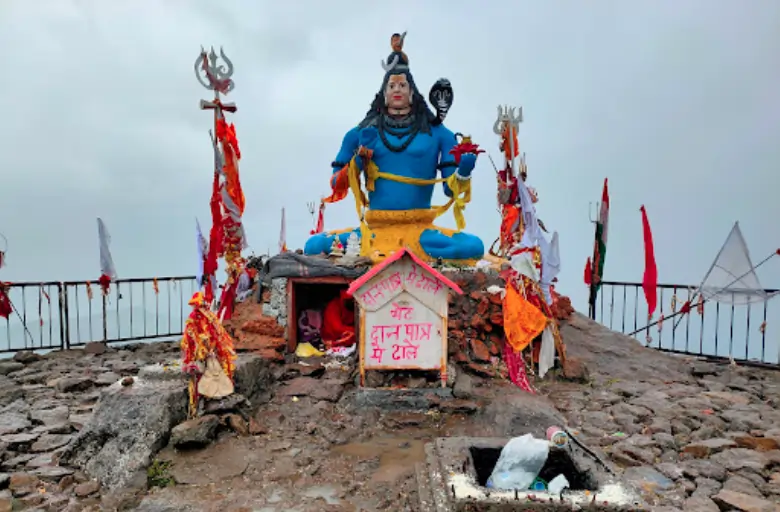
The highest peak in the outer Himalayas, with a temple at the top and views that run for hundreds of kilometres. This is Churdhar.
Most weekend treks give you a ridge. Churdhar gives you the whole horizon. At about 3,647 metres it is the highest peak in the outer Himalayan range, and from the top, on a clear day, the view runs from the plains near Shimla all the way to the snow giants of the greater Himalaya. This is the big one in our weekend list, a trek for legs that have earned it.
The highest of the outer Himalayas
Churdhar, also known as Chur Chandni, the "bangle of snow," stands in Sirmaur district of Himachal Pradesh, the high point of the outer or lesser Himalayan belt. Its summit sits inside the Churdhar Wildlife Sanctuary, home to monal pheasants and musk deer, and the climb passes through dense forest before breaking out onto open, windswept ridges. Because it stands apart from the higher ranges behind it, the summit view is enormous and uninterrupted, which is the whole reason people make the effort.
The lower half of the climb is all forest: tall deodar and oak that keep the trail shaded and cool even in early summer, with the chance of spotting a monal pheasant breaking cover if you walk quietly. Higher up the trees thin out and the world opens, until you are on bare ridge with nothing between you and the wind. That contrast, deep forest to exposed summit in a single climb, is part of what makes Churdhar feel bigger than its altitude suggests.
From the top, the plains, the Sutlej basin and the great Himalaya all line up at once. Few outer-range peaks give you that.
The Shirgul temple at the top
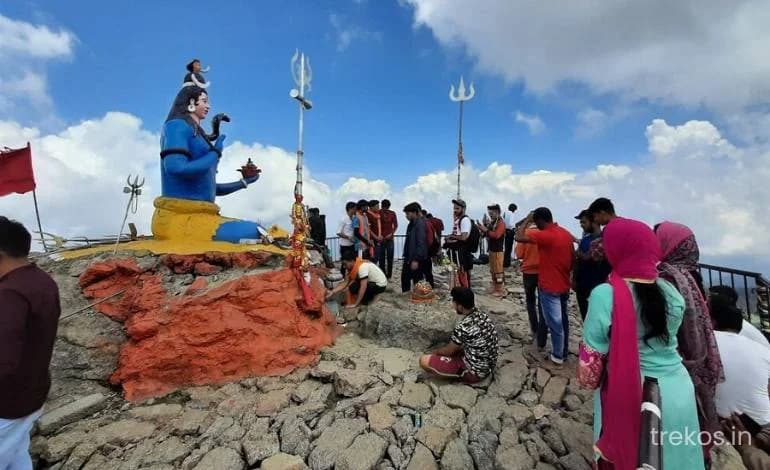
Near the summit stands a temple to Shirgul Maharaj, the local deity of the region, which draws pilgrims as well as trekkers through the season. The name Chur Chandni comes from the way snow rings the peak like a silver bangle. Reaching the temple after a long climb, with prayer flags snapping in the wind and the whole range laid out below, is the kind of summit moment that stays with you. Treat the shrine and the sanctuary with the respect they are due.
The route from Nohradhar
Base at Nohradhar
The standard start is Nohradhar at about 1,900 m. Other approaches exist from Sarahan and Chopal, but Nohradhar is the most used.
Forest climb to Teesri
A long, steady climb through thick sanctuary forest reaches the common halt at Teesri, where most groups camp on the first night.
Up to Jamnala
Above the treeline the trail crosses meadows toward Jamnala, the high camp used for an early summit start.
Summit and the temple
A final exposed push reaches the Churdhar summit at about 3,647 m and the Shirgul temple, with 360 degree views, before the long descent.
The full route climbs about 1,747 m over 16 km, from Nohradhar at 1,900 m through Teesri and Jamnala to the summit at 3,647 m.
Climb Churdhar with us
Camps, permits, meals and a captain who knows the route.
How hard is it
Be honest with yourself here: Churdhar is challenging. The climb is long, around 14 to 16 km one way, and the height gain from Nohradhar to the summit is well over 1,700 metres. It is best done over two to three days rather than rushed. There is nothing technical, but it demands real fitness, a head for long days, and some prior trekking under your belt. This is not a first trek. If you are still building up, our easier weekend treks from Delhi are the place to start.
Best season and permits
- April to June: the main season, with patchy snow lingering high up early on. Clear, long days.
- July to August: monsoon. Slippery forest, leeches and clouded summits. Avoid.
- September to November: the clearest views of the year and stable weather, until the cold sets in.
- Deep winter: heavy snow closes the upper trek to all but experienced winter mountaineers.
What it costs
As a longer, higher trek, Churdhar usually costs more than a one-night weekend climb, because it runs over two to three days with more camping, food and support. Independently it is affordable if you are experienced and self-sufficient, but the permits, the distance and the exposure make a guided trip the safer call here. For dates, inclusions and pricing, see our Churdhar trek package.
How to reach Churdhar
The base region around Nohradhar is roughly 400 km from Delhi, reached via Chandigarh and Solan toward Rajgarh, or via Shimla and Chopal. Most groups travel overnight and start the climb the next day. For the journey itself, our guide to the overnight Volvo to Himachal covers the bus side, and the best weekend treks from Delhi shows where Churdhar sits among the harder options.
Take on Churdhar with us
A guided climb to the highest peak in the outer Himalayas, with camps, permits and a captain who knows the route.
See dates and pricingFrequently asked questions
How high is Churdhar peak?
Churdhar, also called Chur Chandni, is about 3,647 m (roughly 11,965 ft), the highest peak in the outer or lesser Himalayan range, in Sirmaur district of Himachal Pradesh.
How difficult is the Churdhar trek?
Challenging. It is about 14 to 16 km one way from Nohradhar with over 1,700 m of height gain, usually done over two to three days. It suits experienced, fit trekkers rather than beginners.
Do you need a permit for the Churdhar trek?
Churdhar lies within the Churdhar Wildlife Sanctuary, so entry permissions and forest-department rules can apply. Confirm current requirements before you go, or trek with an operator who arranges permits.
What is the best time for the Churdhar trek?
April to June and September to November. The trek is closed or under heavy snow in deep winter, and monsoon brings slippery trails and leeches in the forest.